

SafetyConfig, which goes on
the follower rather than the leader. Only the follower can enforce a limit, so
one configured anywhere else is a suggestion.
Safe states
The follower is always in one of five states, and only one of them moves the robot.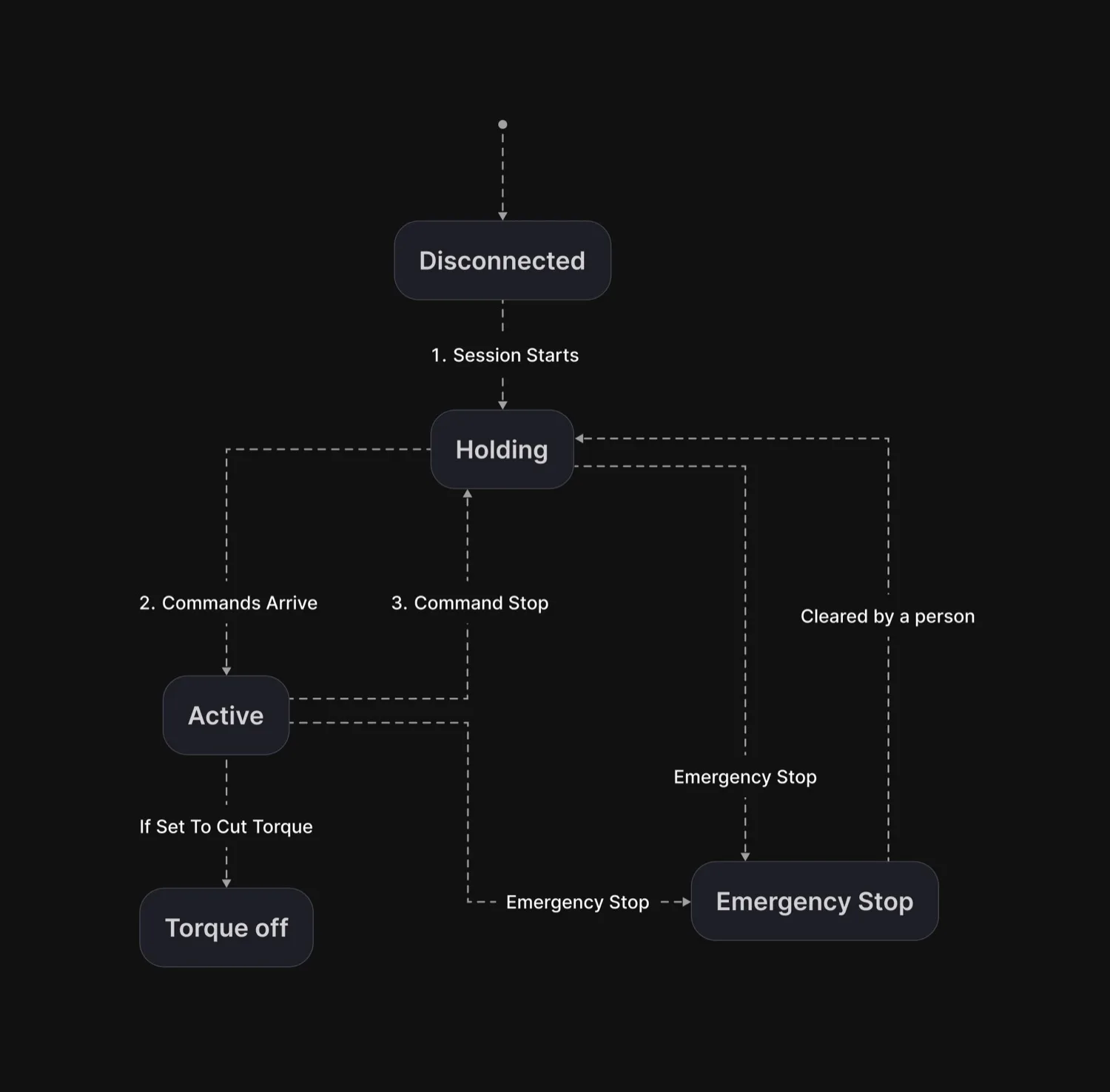
A normal session moves between
HOLDING and ACTIVE all the time. Letting go
of the deadman, a network blip, or a slow tick all drop it back to HOLDING,
and the next command that arrives picks it up again.
Three things worth knowing:
HOLDINGis the default failsafe, notTORQUE_OFF. Cutting torque on a loaded arm drops it, so the arm holds instead.ESTOPPEDnever clears itself. Onlyclear_estop()leaves it, which is what makes it an emergency stop.TORQUE_OFFis recoverable.arm()reads where the arm has come to rest, puts the power back and returns toHOLDING. Because it reads first, the arm holds where it actually is rather than travelling back to the old target through whatever arc it fell through.
Before you run it
Related
Follower
The gates, the emergency stop, and recovering from a failsafe.
Leader
Claiming control, the deadman, and arming.
Configuration
Every safety setting and its default.
Recording
What a clamp leaves in the dataset.